
Giving families with a sick child what they need most – each other.
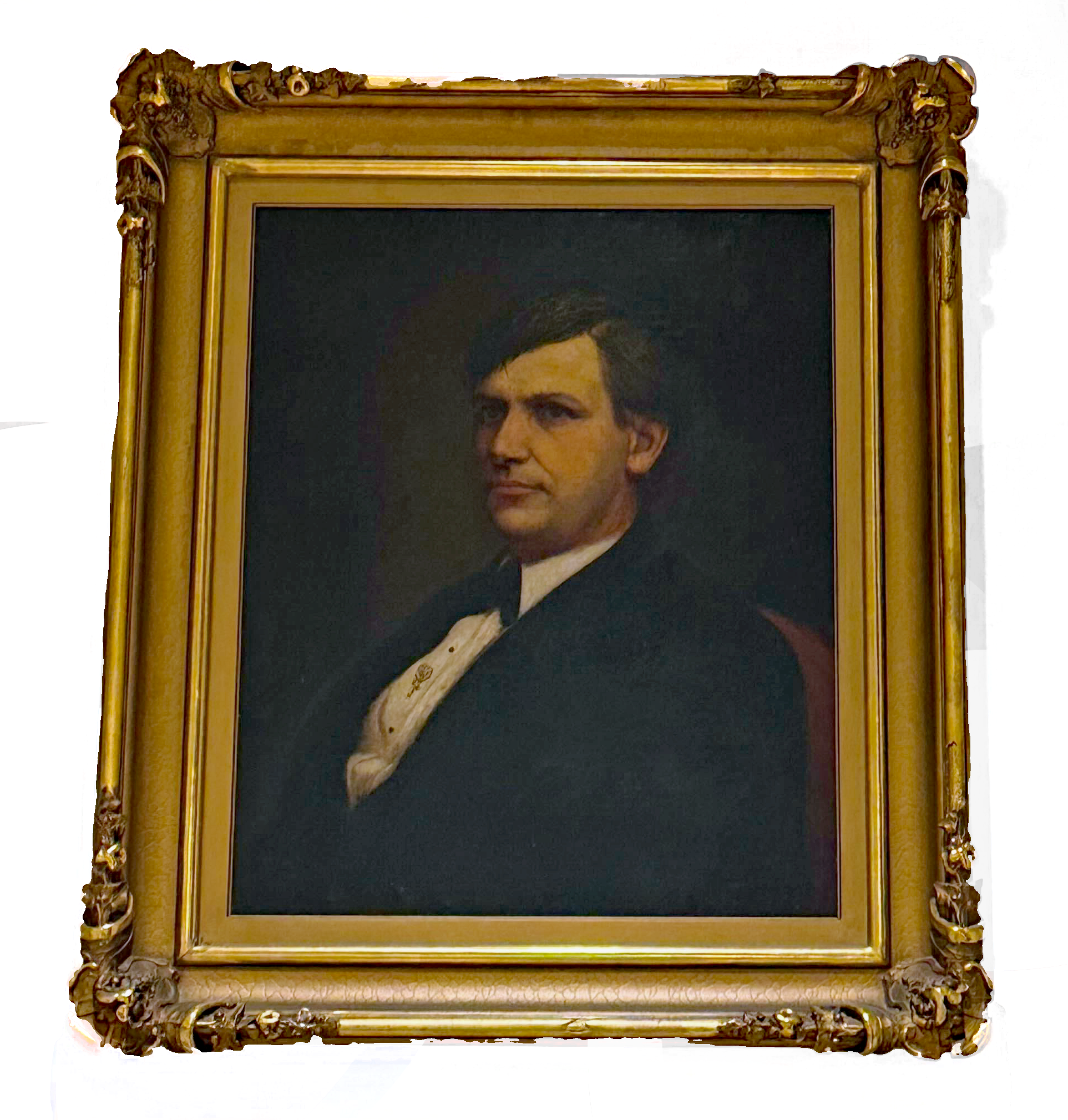
Portrait of Dr. Clinton “Big Medicine” Kelly (1844-1923)
Dr. Kelly is a former dean and trustee of Louisville Medical College, a precursor to the University of Louisville Medical School, leading the efforts to construct this building, opening in 1893 and serving as the school’s home. Portrait donated by Dr. Kelly’s great-granddaughter, Virginia Kelly Judd.
In honoring the legacy of Dr. Clinton Kelly, we recognize his significant contributions to the construction and establishment of this remarkable building, which has been a cornerstone of medical education and community since its opening in 1893.
However, it is essential to acknowledge the historical context of Dr. Kelly’s time. Despite his notable achievements, his involvement with the Confederacy, a faction associated with the preservation of slavery and the division of the United States, is a part of his history that does not align with RMHCK’s values of inclusivity, diversity, and the well-being of all individuals and communities.
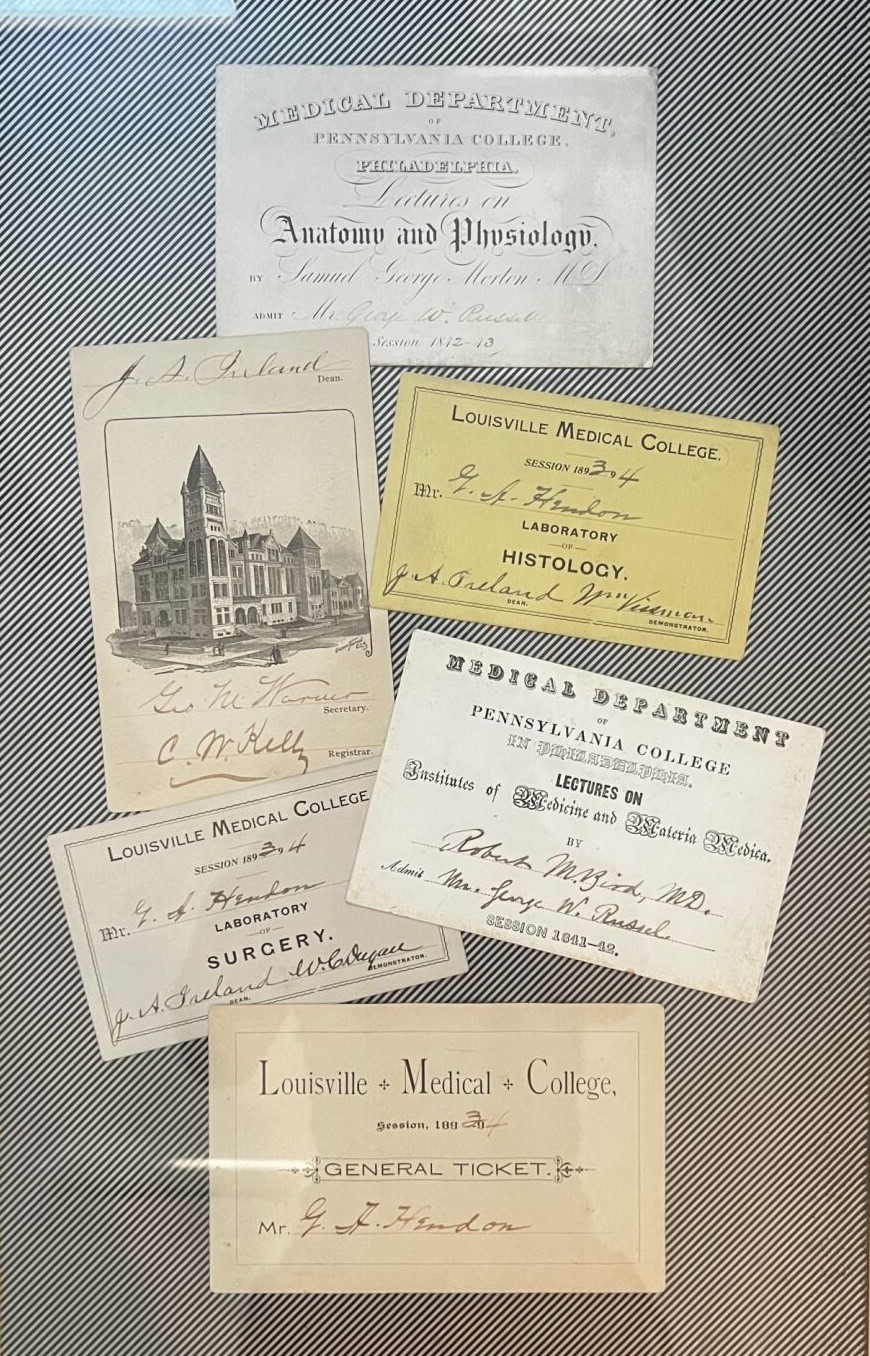
Historical Medical Artifacts
This collection of vintage documents and tickets offers a glimpse into the rich history of medical education in the late 19th and early 20th centuries. Featured items include:
- Anatomy and Physiology Lecture Ticket from the Medical Department of Pennsylvania College, Philadelphia.
- Louisville Medical College Admission Card for Histology and Surgery.
- General Ticket for the Louisville Medical College.
These items reflect the rigorous training and dedication required of medical students during this era, showcasing the foundations upon which modern medical practices were built.
Generously on loan from Greater Louisville Medical Society
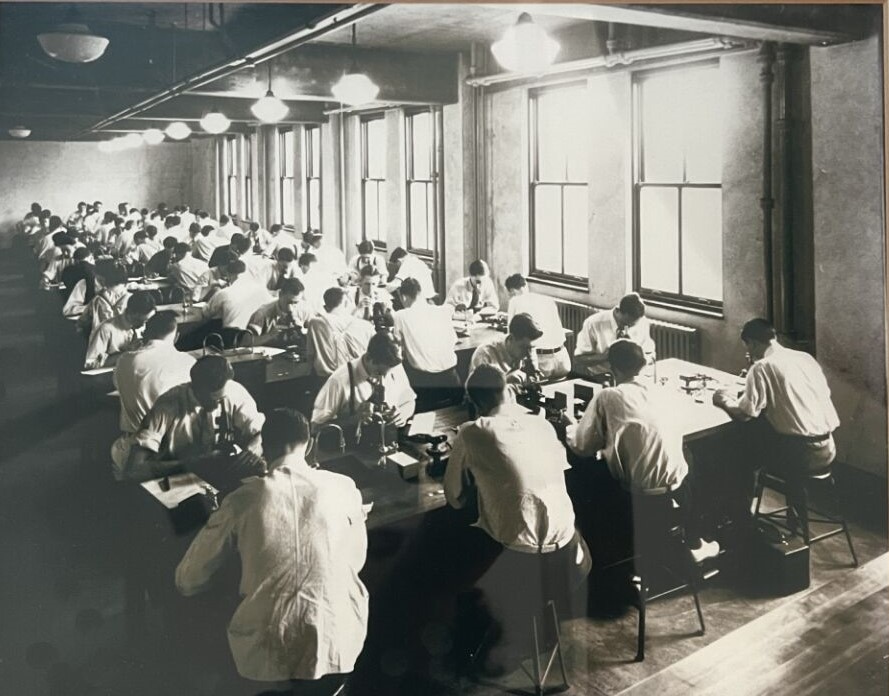
Pathology and Bacteriology
This 1936 photograph shows the sophomore class in Pathology and Bacteriology in the student laboratory on the third floor of what is now Ronald McDonald House. During the 1932-1933 school session, the Departments of Pathology and Bacteriology were administratively separated but continued to share this space.
Generously on loan from Greater Louisville Medical Society
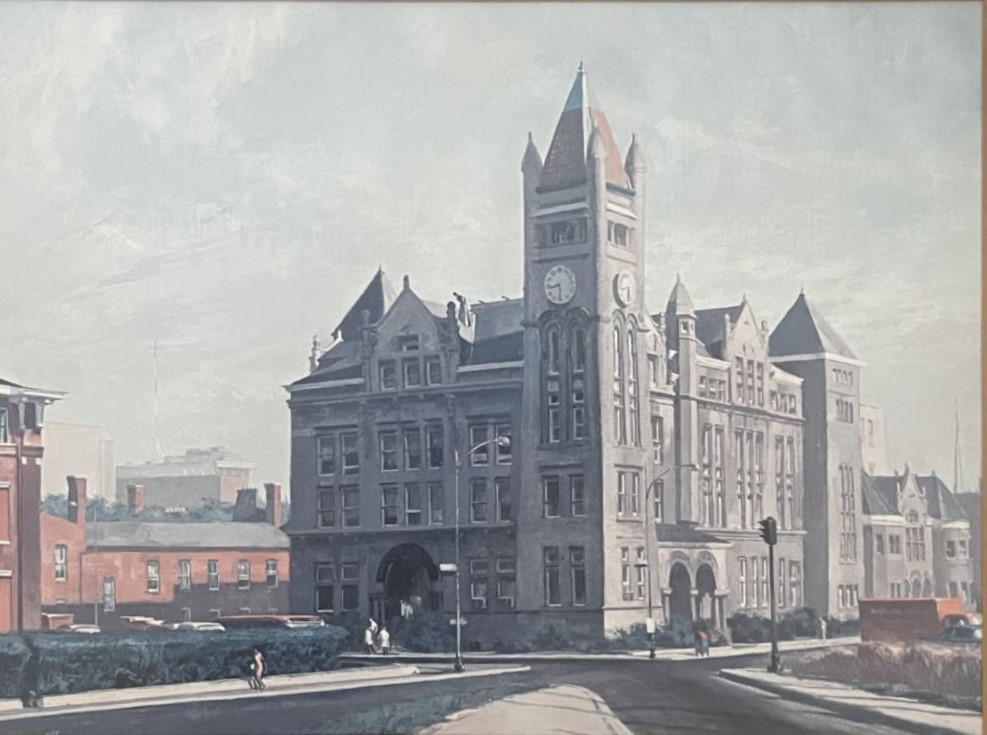
University of Louisville School of Medicine
This print, based on an original painting by Stanley Meltzoff, depicts the historic University of Louisville School of Medicine. The artwork captures the architectural grandeur and significance of this esteemed institution in medical education.
Generously on loan from Greater Louisville Medical Society
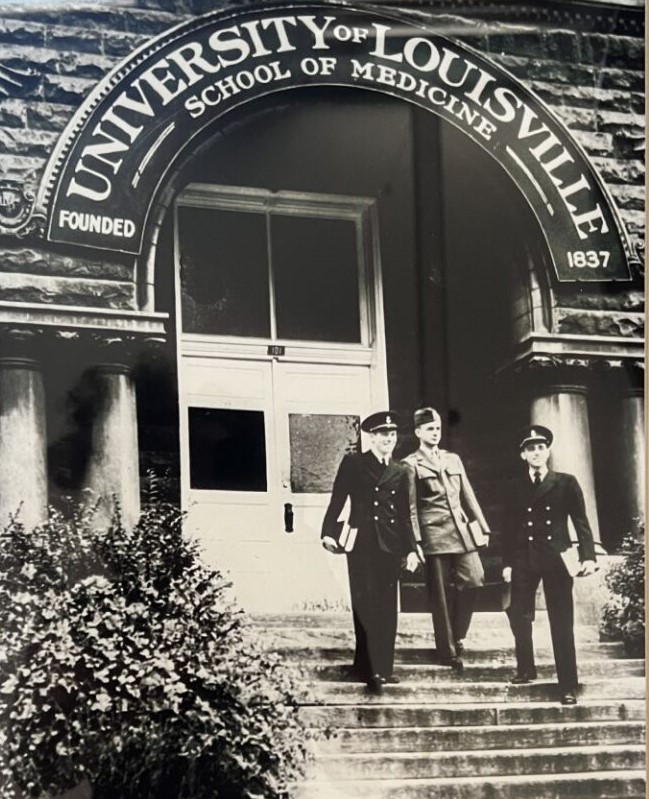
University of Louisville School of Medicine During WWII
During World War II, the University of Louisville partnered with the Government to educate students for the Armed Forces. The curriculum was adapted to focus on military medicine. This photograph captures two men from the 1557th Army Service Unit and one from the Navy V-12 Unit stationed on the university campus.
Generously on loan from Greater Louisville Medical Society
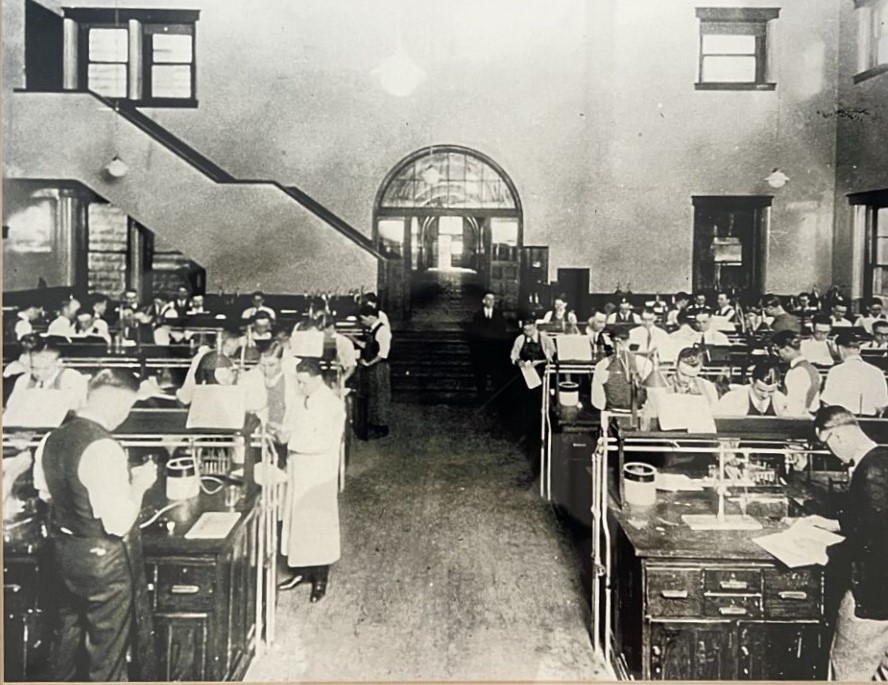
Physiological Chemistry Laboratory, 1922
This photograph, taken in 1922, shows the Physiological Chemistry Laboratory under the direction of Dr. Hays. In 1923, he was succeeded by the renowned research physiologist Dr. Barbour. The laboratory was located on the first floor, just past where the elevators are now, in the current Ronald McDonald House Building.
Generously on loan from Greater Louisville Medical Society
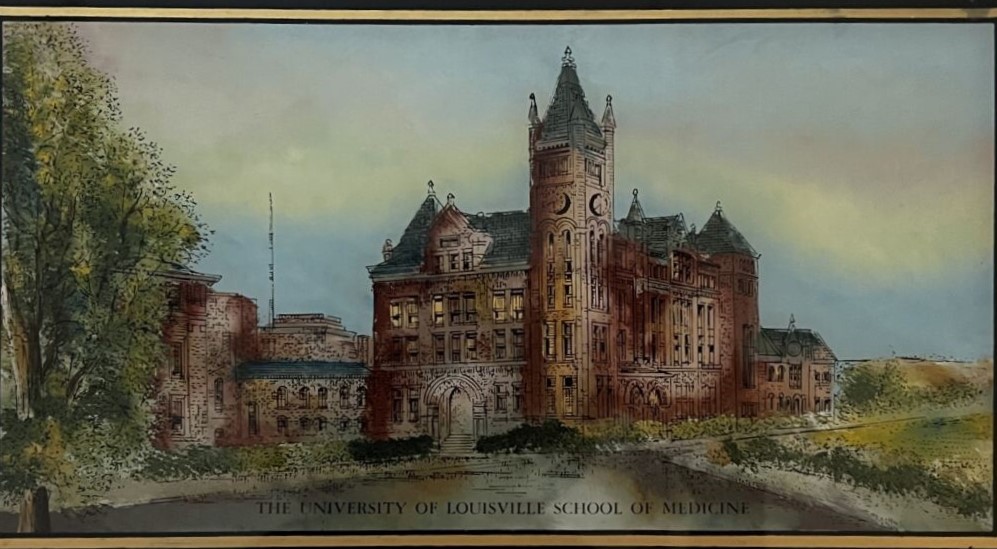
University of Louisville School of Medicine
This vibrant painting captures the historic University of Louisville School of Medicine. The rich colors and intricate details highlight the architectural beauty and significance of this esteemed institution. The scene reflects the university’s enduring legacy in medical education and its commitment to advancing healthcare.
Generously on loan from Greater Louisville Medical Society
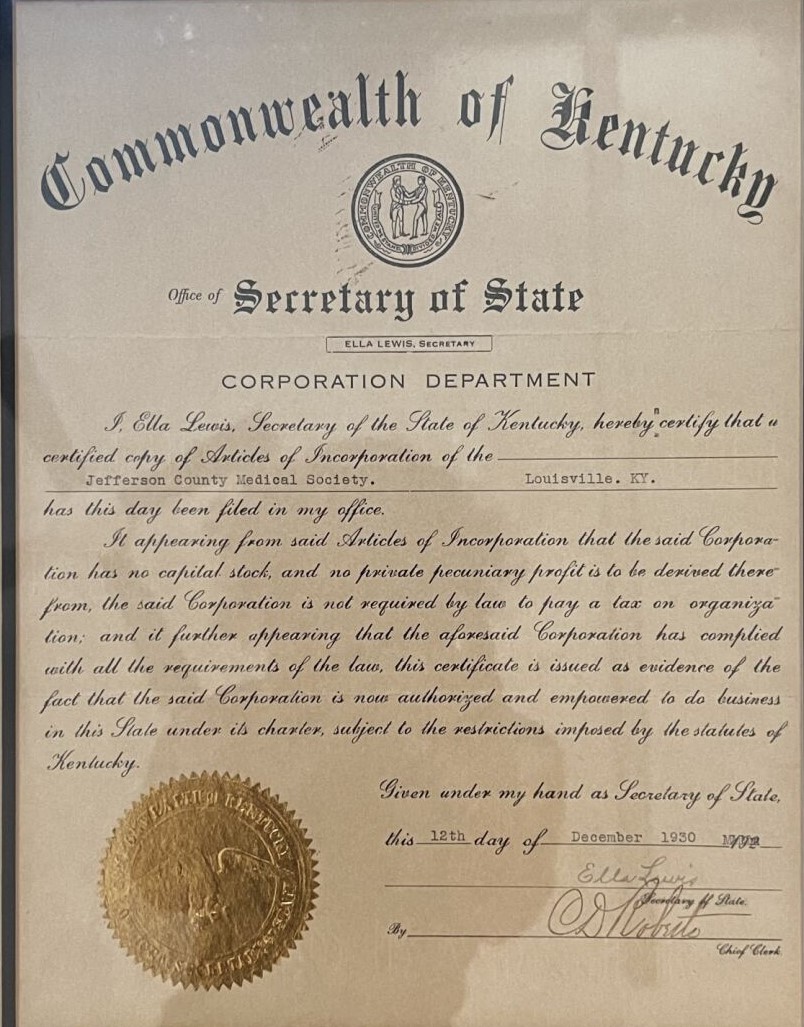
Jefferson County Medical Society Articles of Incorporation
This document certifies the incorporation of the Jefferson County Medical Society. Issued on December 12, 1930, by Secretary of State Ella Lewis.
Generously on loan from Greater Louisville Medical Society
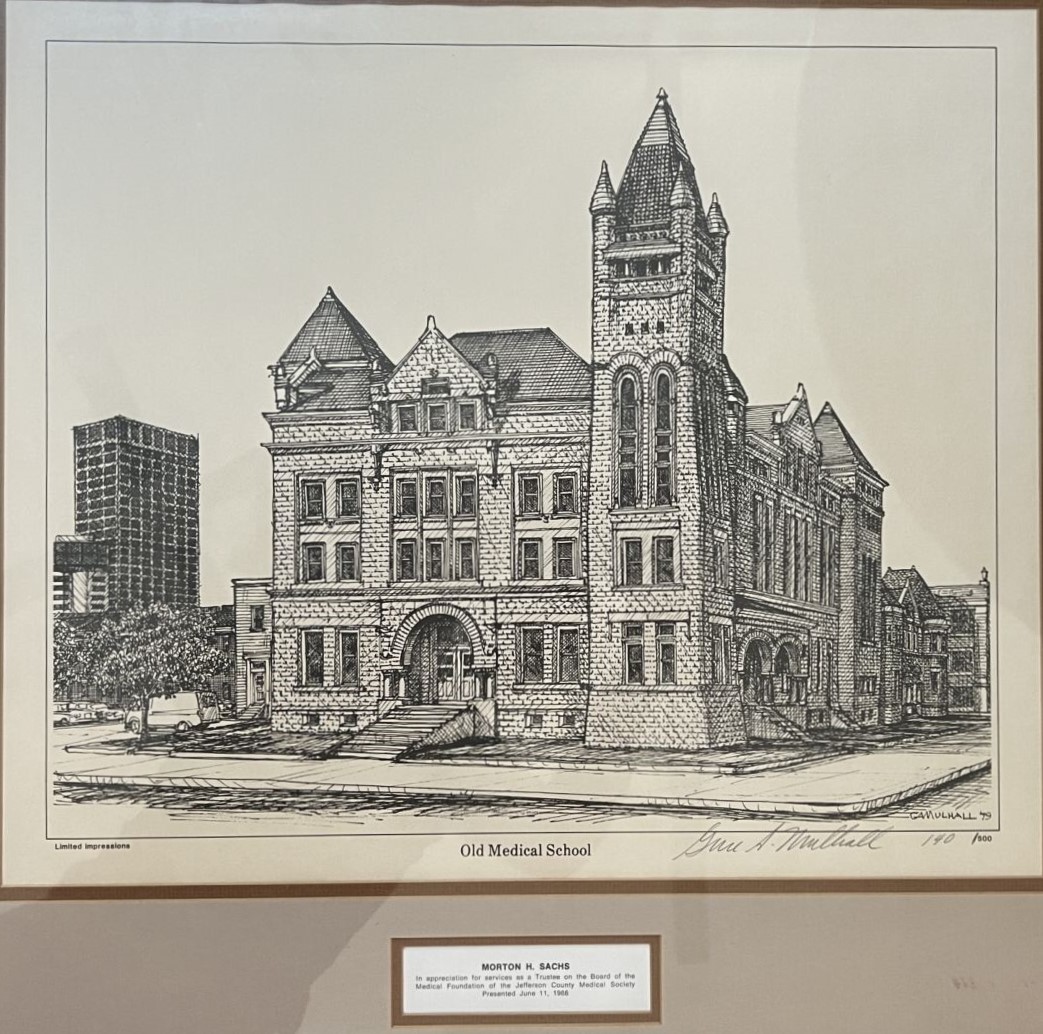
Old Medical School
This detailed illustration depicts the historic Old Medical School building, a cornerstone of medical education in Louisville. Established in the late 19th century, this institution has been a beacon of learning and innovation, shaping countless medical professionals’ futures.
Generously on loan from Greater Louisville Medical Society
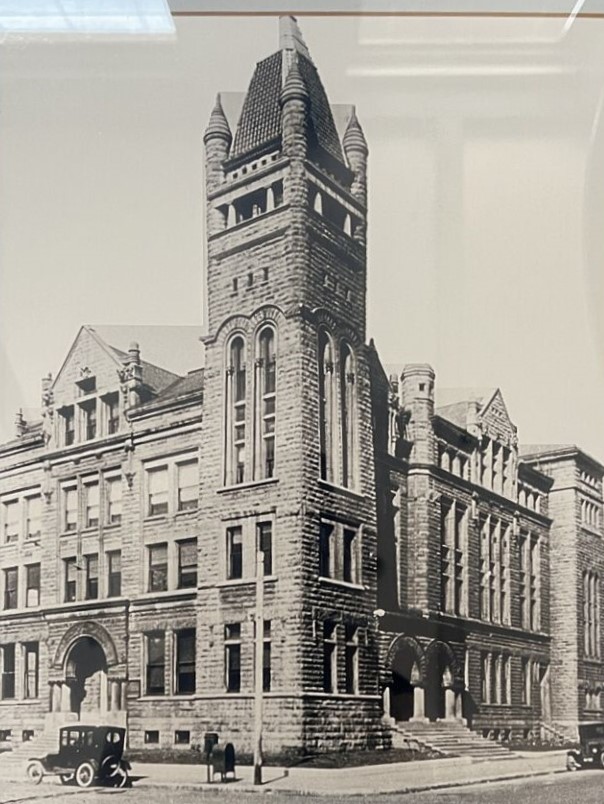
Old Medical School, 1922
The Model T Ford shown here in front of the Old Medical School is a 1921 Centerdoor, dating the photograph to 1922. In that same year, the University of Louisville’s Board of Trustees renamed the medical school to the University of Louisville School of Medicine. As seen in the photograph, the famous University of Louisville School of Medicine archway sign, now located in a first-floor hallway, had not yet been erected.
Generously on loan from Greater Louisville Medical Society

Medical School Library
This photo captures a timeless moment, likely from the late 1940s or early 1950s. Students once descended these very stairs in search of quiet study spaces tucked into small alcoves—hidden corners perfect for focused reading and reflection.
Microbiology Lab, 1930s
Once a hub of discovery, though simple by today’s standards, this lab laid the groundwork for modern science. As our understanding of microscopic life has grown, so has the need for more advanced spaces to study it.
Biochemistry Lab
This photo shows the 1935 addition, angled to meet the original 1893 building. The lab’s double-height ceiling helped vent fumes—a smart solution for its time. Though outdated by today’s standards, it served generations of students. In the 1970s, a common warning captured the program’s rigor: “One of your lab partners will be gone in six months.”
Historic Instruments
This photo shows a 1935 microbiology lab with single-headed microscopes and limited magnification by today’s standards. Still, students made accurate diagnoses with the tools they had. These early labs played a vital role in shaping modern medical diagnostics.
Student Lounge
This image shows a simple space where students brought their own food. Despite its modest setup, it buzzed with chess games, cards, and camaraderie. Students and faculty gathered here, creating a close-knit community whose spirit still echoes in the modernized space.
Dr. Richard Wolf
Dr. Wolf’s dedication helped save the historic building that now houses Ronald McDonald House Charities of Kentuckiana. Once marked for demolition, it was preserved thanks to efforts led by the Jefferson County Medical Society and Dr. Wolf, a devoted pediatrician. He took on an unofficial role as construction manager, committing countless volunteer hours.
Anatomy Lecture Hall
This image shows the third and fourth floors of the original 1893 building, facing Chestnut Street, featuring early stadium-style seating. The tiered design gave students clear views of detailed demonstrations—an example of the era’s commitment to hands-on, immersive medical education.
The Last Class
The class of 1970 was the last to graduate from the historic Louisville Medical School building. At their 50th reunion, they honored their legacy by donating a room. Their gift reflects a deep bond with the building and a wish for future guests of the Ronald McDonald House to feel the same warmth and sense of belonging they once did.
Members of the Greater Louisville Medical Society Board
Members of the Greater Louisville Medical Society Board of Directors stand on the steps overlooking Chestnut Street.
Dilapidated Yet Determined
Peeling ceilings and scattered equipment reflect the former chemistry lab’s long dormancy. Pictured are Dr. Sam D. Weakley, left, whose support helped equip the space for expanding science education, and Dr. Richard Wolf, right, who volunteered as construction manager of the restoration project. His steady leadership was key to preserving the historic building.